Software releases in education are usually announced through changelogs, version numbers, and short README files. Rarely do they mark a moment worth reflecting on. The publication of the Friction Radar Moodle plugin by Aeternum Modulae is different, because it addresses one of the most overlooked problems in digital education: learning friction.
Learning friction describes the points in a course where students hesitate, struggle, or disengage without necessarily failing outright. Traditional learning analytics focus on outcomes such as grades, completion rates, or activity counts. They often miss what happens in between. Friction Radar was created to make this invisible layer of learning visible.
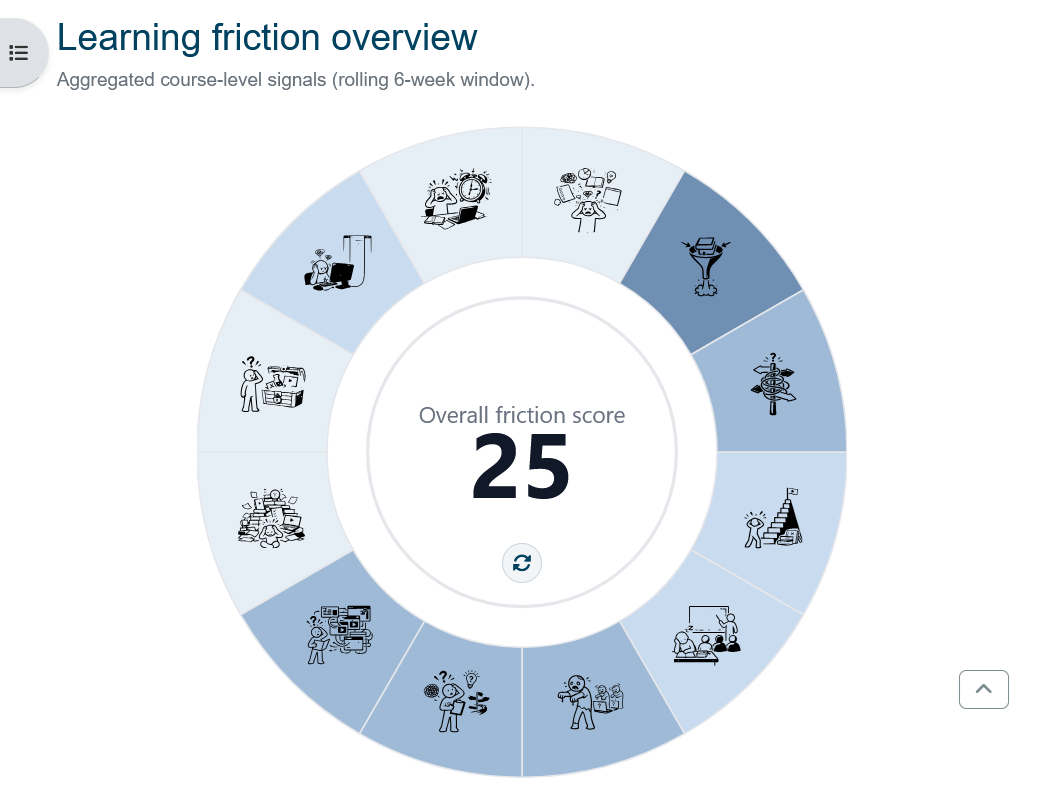
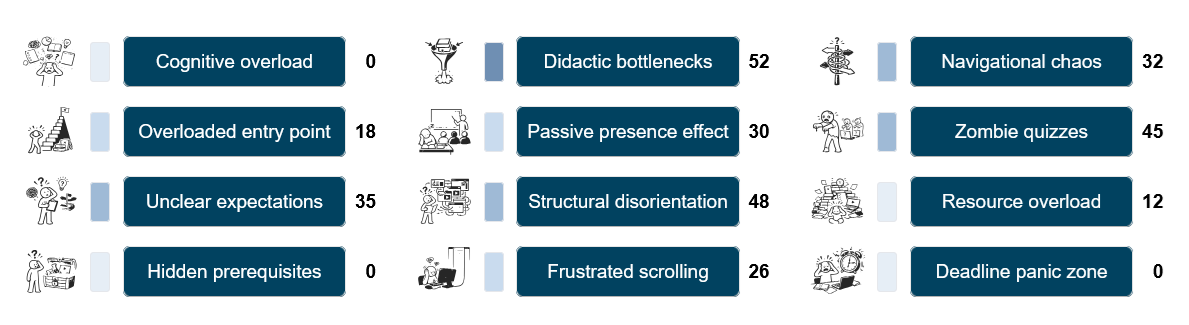
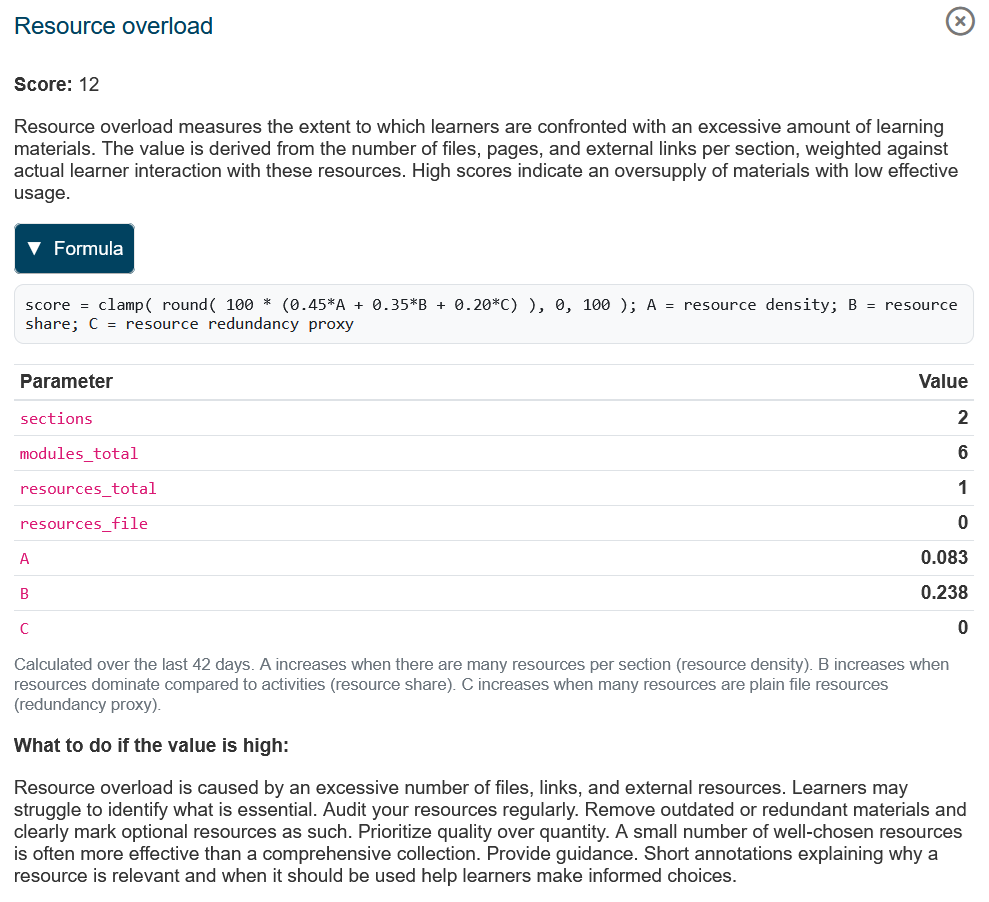
The plugin emerged from everyday teaching practice in higher education. Lecturers often sense that something in their course design is not working, but lack concrete data to support this intuition. Friction Radar translates these gut feelings into structured signals by analyzing navigation patterns, repeated interactions, abandoned views, and structural characteristics of Moodle courses. The result is a clear report that highlights where learning friction accumulates.
Screenshots:
Making friction visible
Friction Radar aggregates small usage signals and makes visible where course design, structure, or didactics slow learners down. It helps teachers see not just that something is wrong, but where and why improvements to the course design are needed before students disengage.
This approach deliberately avoids student surveillance or performance scoring. Instead, it treats learning friction as a systemic property of course design. When many learners struggle at the same point, the issue is rarely individual failure. More often, the course structure, instructions, or sequencing create unnecessary obstacles. Friction Radar reframes the conversation from blaming learners to improving learning environments.
From a technical perspective, the plugin follows modern Moodle development standards and is designed to be extensible and transparent. But its real significance lies in its open source release. By publishing Friction Radar on GitHub, Aeternum Modulae makes its assumptions, methods, and code publicly inspectable. Universities can adapt the plugin to local requirements, audit its logic, and contribute improvements.
There is also an institutional dimension to learning friction. Educators frequently need evidence to convince administrators to revise course structures or invest in didactic improvements. Friction Radar provides a shared, data-based language that supports these discussions without reducing teaching to compliance metrics.
Rather than promising automated optimization or guaranteed engagement gains, the plugin encourages reflection. Why do students pause here? Why does this activity create resistance instead of curiosity? Why does the course assume prior knowledge that has not yet been established? Learning friction becomes a starting point for meaningful pedagogical change.
In this sense, Friction Radar is more than a reporting tool. It is a mirror for course design and a contribution to a broader debate about how digital education should function. Its release signals a commitment to transparency, evidence-based teaching, and open collaboration. Addressing learning friction is not about eliminating difficulty, but about removing unnecessary barriers so that learning effort is spent where it truly matters.


0 Comments